
The best portable tablet keyboards for a mixed-device kit should be easy to carry and understandable when switching between supported hosts. This comparison is for people who bring a tablet plus another device, rather than choosing a keyboard permanently tied to one fitted case. Check each operating system separately. A model that supports your computer is not automatically approved for an old tablet, and a small keyboard still needs a practical screen-support plan.
Research method: We checked the cited manufacturer documentation on November 11, 2026. These are research-based selections, not hands-on test results. Labels describe use cases; they are not measured performance awards. No retailer star ratings or changing prices are used to rank these choices.
Start with this buying decision
A tablet-and-phone kit benefits from consistently assigned Bluetooth channels if both devices are supported. A tablet-and-laptop kit may also make alternate computer connection modes useful. Check whether the complete arrangement still fits the bag and whether you can tell which device receives input after a break. Carrying a keyboard that needs an elaborate stand or confusing power routine can defeat the point of portability. Choose the controls and packing arrangement that fit the way you move, while keeping language layout and essential app commands on the required list.
Product choices and compatibility limits
| Product or route | Reason to investigate | Decisive check |
|---|---|---|
| Logitech Pebble Keys 2 K380s | Compact multi-device Bluetooth | Separate tablet support; verify OS and shortcut requirements |
| Logitech Keys-To-Go 2 Universal | Covered keyboard for a supported travel kit | Universal version requires Android 12+ or iPadOS 17+; not an Android 10 recommendation |
| Keychron B1 Pro | Compact keyboard with several connection modes | A separate keyboard, with host support checked for each intended mode |
| Logitech MX Keys Mini | Compact illuminated keyboard for a desk or writing kit | Check exact edition and system requirements; desktop customization is separate from tablet input |
Logitech Pebble Keys 2 K380s
Logitech documents Bluetooth pairing with three devices and lists Android 9 or later among the K380s requirements. This makes it a candidate for a shared typing setup when the tablet meets those requirements. Its purpose here is compact everyday input, rather than an unsupported claim that it is the fastest keyboard.

The main purchasing decision is whether a separate screen support suits your routine. You can choose the stand independently, but must carry and arrange both pieces. Check the modifier keys and essential shortcuts in your app before relying on desktop habits. Device switching is useful only if the controls remain understandable during ordinary breaks. Choose a fitted cover instead when keeping everything together matters more than positioning flexibility, or a numeric layout when repeated figures are the central task.
Consider it for: Compact multi-device Bluetooth. Check before buying: Separate tablet support; verify OS and shortcut requirements. Read the manufacturer documentation.
Logitech Keys-To-Go 2 Universal
Keys-To-Go 2 Universal is the portable option to compare when your installed software meets Logitech’s requirements. The published list includes Android 12 or later and iPadOS 17 or later. There is also an Apple version, so selecting the right variant is part of compatibility rather than a cosmetic choice.
The covered separate-keyboard arrangement is useful when you want to retain an existing tablet case and bring physical keys only when needed. The keyboard cover does not replace screen support or protection for the tablet. Add those pieces to the travel comparison. Skip this candidate when the software minimum is not met; the presence of Bluetooth on an older tablet does not override the published requirement. Choose an integrated case when fast setup as one package is more important than carrying independent components.
Consider it for: Covered keyboard for a supported travel kit. Check before buying: Universal version requires Android 12+ or iPadOS 17+; not an Android 10 recommendation. Read the manufacturer documentation.
Keychron B1 Pro
Keychron lists a 75% layout and Bluetooth, 2.4 GHz, and USB-C wired connections for the B1 Pro. Its platform list includes Android, iOS, Windows, macOS, and Linux. This makes it worth considering when the same keyboard serves a tablet and a computer through different connection methods.
Extra modes are choices to verify, not permission to assume every tablet accepts every receiver or cable. Establish the intended path before buying a hub. The keyboard also needs independent screen support. Compare it with a fitted case if unpacking several pieces is the problem you want to solve. Choose a full-size alternative when numeric entry matters more than compactness. A published platform list supports the initial shortlist, but you still need to check an older OS and essential app commands rather than infer complete compatibility from the connector shape.
Consider it for: Compact keyboard with several connection modes. Check before buying: A separate keyboard, with host support checked for each intended mode. Read the manufacturer documentation.
Logitech MX Keys Mini
MX Keys Mini is worth comparing when a compact illuminated keyboard is useful for the way you work. Logitech identifies it as a wireless illuminated model. Treat the exact edition, platform requirements, and supported shortcuts as separate checks instead of extending a desktop feature list to every tablet.
The reason to choose this style is a compact writing arrangement with lighting where it is genuinely needed. It does not hold or protect the tablet, so include a stand and storage solution. Try navigation and punctuation in your actual editor during the return window. Choose a number-pad model for frequent numeric entry, or a simpler unlit alternative when illumination would add little practical value. Neither the premium positioning nor familiar-looking keys establish superior comfort for every user; the relevant evidence is whether the setup serves the tasks and environment you actually have.
Consider it for: Compact illuminated keyboard for a desk or writing kit. Check before buying: Check exact edition and system requirements; desktop customization is separate from tablet input. Read the manufacturer documentation.
How the candidates were selected
We compared documented connection methods, stated platform support, physical setup requirements, and practical limitations. A candidate must meet the conditions relevant to the tablet before optional features influence the choice. The order of products is a reading order, not a universal performance ranking. For model-specific accessories, the fit condition applies only to the named device and selected version.
Manufacturer specifications establish what to verify; they do not establish identical behavior in every app. Our review methodology explains the difference between research and direct testing. Treat an unresolved software or physical-fit requirement as a reason to obtain confirmation before purchasing.
Checks for this tablet setup
Try packing and setting up the whole kit
Pack the tablet, keyboard, stand, mouse, cable, and protection in your everyday bag. Keyboard weight alone does not describe the travel load. Independent pieces offer flexibility, but each is another item to unpack and remember. An attached cover keeps things together only if you are happy carrying the keys when you do not plan to type.
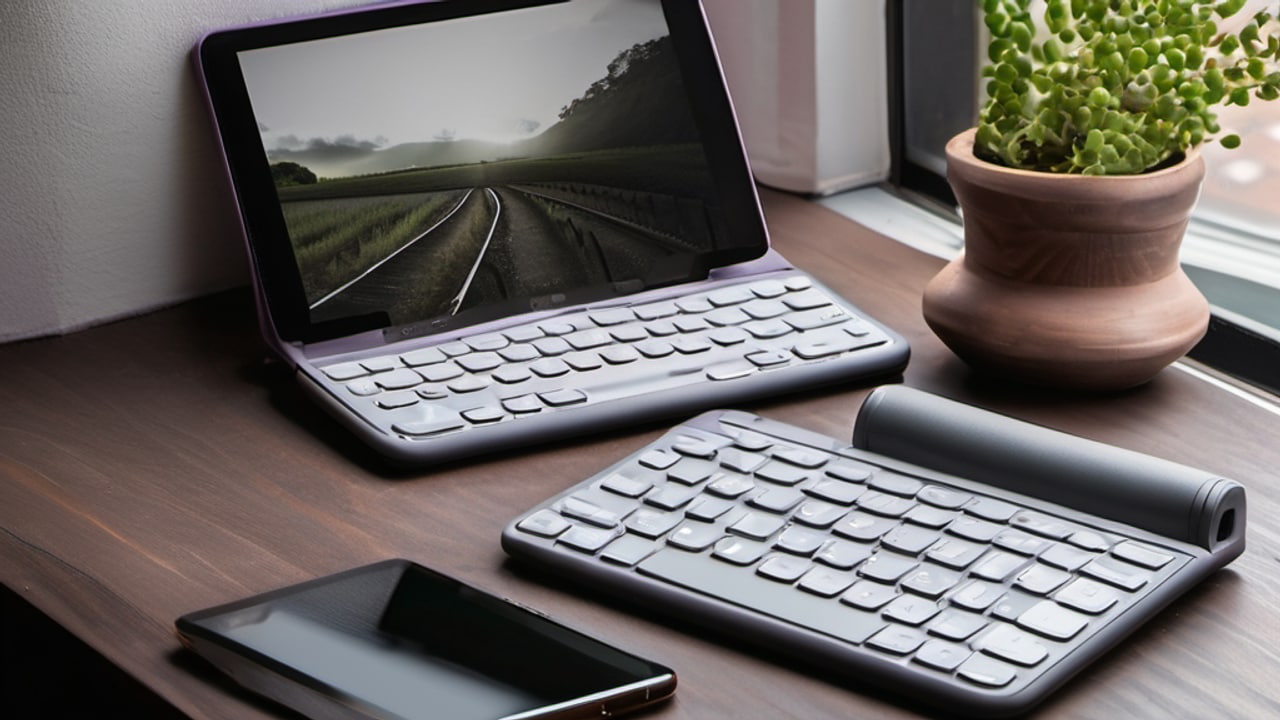
Practice arriving, setting up, writing a message, and leaving. Count the steps that feel inconvenient. A very small keyboard can belong to a bulky kit once support and protection are included. A fitted arrangement can be simpler to manage, but less pleasant for handheld reading.
Choose around the routine you repeat. If packing the accessory is awkward enough that you leave it behind, its headline features will not help when unexpected writing occurs. Equally, do not accept unnecessary weight for every outing if your tablet is mostly used without a keyboard. The useful choice fits the real mix of travel and typing.
Keep device channels and input destinations clear
Assign stored channels consistently if the keyboard supports several hosts. Reserve one for the tablet and another for the computer, for example. A small note can help until the controls become familiar. Before entering a private message or password, confirm both the active device and the application with focus.
Remember that switching a keyboard does not automatically switch a separately connected mouse. Test the change in both directions and check whether modifier behavior or app focus needs attention. A shared desk benefits from predictable recovery rather than merely having the largest number of connection options.
If only one host is used, extra channels may add little value. If several people share the arrangement, test it with the least experienced user. A dedicated keyboard can be more practical than a sophisticated shared setup if people repeatedly type into the wrong screen or require help restoring the expected connection. Convenience depends on the people and routine involved.
Make shared use predictable
Agree on a default channel, language layout, and storage location when several people share the keyboard. Multiple device connections only help when users understand where input goes. A straightforward default or small label can be more practical than expecting everyone to remember unfamiliar indicator patterns.
Try the arrangement with the least experienced intended user. Can they wake the tablet, identify the connection, and begin a message without changing settings? If switching hosts repeatedly creates confusion, a dedicated keyboard may be more convenient than sharing one across the household.
Decide who maintains batteries or charging and where detachable components belong. Shared equipment should serve the people using it daily, not just the person who configured it. Simplicity is a useful feature when it reduces the assistance needed to return to ordinary writing. Compare that benefit with the money and desk space saved by sharing before assuming multi-device operation is always the preferred choice.
Distinguish Bluetooth from receiver-based wireless
Wireless can describe Bluetooth or a separate USB radio receiver. A receiver needs a compatible host connection and may require an adapter on a tablet. Some keyboards offer both methods, but support for one does not establish every host’s support for the other. Verify the exact receiver type and whether it is included.
Bluetooth can leave a limited tablet charging port free. A receiver may be useful for a computer without a suitable Bluetooth connection, but that does not make it the preferred tablet method. Check the intended mode on each device before purchasing adapters.
A charging socket on a keyboard is not proof of wired keystroke support either. Keep connection, charging, and physical attachment separate in your comparison. Each extra component should solve a verified requirement. This prevents a computer feature from becoming an unsupported promise about tablet ports or accessory behavior and makes it easier to understand which part of the setup needs attention if something stops working.
Choose a power routine you can maintain
Decide whether charging or replacing batteries is easier in your household or travel routine. A rechargeable keyboard adds a charging task; a replaceable-battery model needs the right supplies available. Check the exact battery and charging instructions, particularly when purchasing used hardware without its original accessories.
Treat maximum battery figures as manufacturer claims under specified conditions, rather than promises for your schedule. Lighting, settings, sleep behavior, and usage can change the result. Comparing claims from unrelated test conditions does not establish which keyboard will last longer in your own work.
Instead, decide how you will notice low power and recover when it happens. Inspect the switch and indicators as well as the battery specification. For a shared device, make sure the person maintaining it understands the routine. Predictable ownership can matter more than the longest advertised runtime, especially when the keyboard is used occasionally and must work after sitting in a bag or drawer.
Recreate the table, tray, or lap before buying
A lap, café table, narrow tray, and office desk provide different support. Check space behind the screen, room for your hands, and whether the arrangement moves when you tap the display. A product marketed as portable can still need a firm or deep surface to be practical once opened.
Recreate your usual surface at home before the return deadline. Stop if the tablet’s support hangs beyond the edge or feels precarious. Do not assume a keyboard cover balances exactly like a conventional laptop hinge. Include touchscreen selection, editing, and plugging in power in the trial.
An arrangement that feels stable only while you remain perfectly still is not ideal for ordinary interaction. Portability describes more than carrying size, and a travel label cannot settle a physical stability question. The sensible purchase supports the complete task in the place it will happen. If that place changes often, consider whether a flexible independent stand is worth the extra piece in your bag.
Include stable screen support in the purchase
A standalone keyboard needs a separate plan for holding the tablet. Check stability while tapping controls, selecting text, or connecting power. A support suitable for watching video may be less convenient when you interact with the touchscreen frequently. Evaluate the viewing angle and distance between screen and keys on the surface you actually use.
Allow space for your hands and any pointing device. If the screen ends up close to the table edge, reconsider the arrangement before choosing the smallest keyboard simply to make it fit. An integrated cradle reduces separate components; an independent stand can provide more placement freedom. Both involve compromises.
Include the support’s cost, storage space, and carrying load when comparing complete setups. The keyboard alone is not the entire workstation. A sensible purchase should remain stable and convenient while you type, edit, and touch the screen, rather than looking tidy only in a product photograph or during passive video playback.
Match printed keys with the tablet’s input layout
Printed characters and the selected software layout are separate things. Confirm the language and regional variant sold, particularly with imported or used keyboards. Incorrect punctuation may come from a mismatch rather than defective hardware. A product photograph does not always prove which regional item will arrive.
If using several languages, test switching and the characters you enter regularly. Keep the on-screen keyboard available when it helps with composition or unusual symbols. Do not assume a familiar desktop command behaves identically in every tablet app.
Before returning a keyboard for wrong characters, check the hardware layout and software setting together. A configuration change can sometimes solve the problem, while a genuinely unsuitable physical arrangement can justify another model. Use actual text, including punctuation and any accented characters needed for work. This is more revealing than a test limited to the alphabet and makes the purchase decision specific to the way you communicate.
Test the entire note-taking routine
Open the correct app and document before judging keyboard feel. Physical keys save little time if locating the right note remains confusing. Try headings, bullets, quick corrections, and the symbols needed in your meetings or classes. Check where input goes after viewing reference material or switching apps.
Then practice packing up and moving. A separate keyboard can stay behind when only reading is planned; a fitted cover keeps the writing equipment together. Both have useful audiences. Choose around how quickly you need to arrive, capture information, and leave.
Do not rank the options by obscure shortcuts you are unlikely to remember during a meeting. The practical goal is reliable access to the text you want to record, with acceptable setup effort. Include sleep and waking in the trial because note-taking is often interrupted. A useful arrangement lets you return to the right document without spending the next important sentence trying to work out which device channel is active.
Final purchase decision
Compare the complete shared-device routine, not just keyboard weight. Support, channel clarity, and setup space decide whether portability is useful.

Keep a copy of the selected model and compatibility requirements with your purchase notes. Complete the app, connection, and physical-setup checks while the applicable return terms allow you to act on the result. Choose an alternative when a required condition fails instead of allowing optional features to outweigh a basic mismatch.
Related buying guides
- Best tablet keyboards: six product choices compared
- Best portable keyboards for Android tablets on the go
- Best-reviewed wireless tablet keyboards: evidence guide
As an Amazon Associate I earn from qualifying purchases.


Write Your Review
No reviews yet. Be the first to share your experience!